






Let’s be honest: hiring is hard.
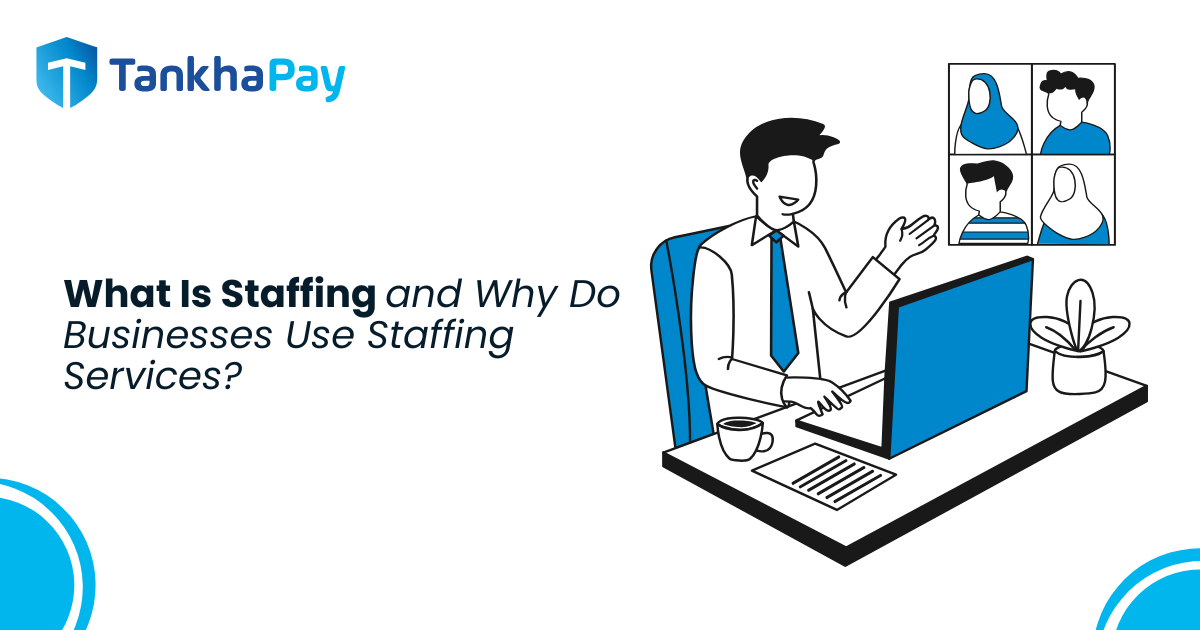
You might have the perfect business plan, a booming sales pipeline, and a company culture that people rave about. But none of that matters if you don’t have the right people to execute the work. This is where staffing comes into play.
Unfortunately, when most people hear “staffing,” they think of temp agencies from the 1980s—rows of workers filling envelopes or answering basic phones. In reality, modern staffing is a sophisticated, data-driven cornerstone of workforce strategy. For today’s agile businesses, staffing services have shifted from a “nice to have” to a competitive necessity.
Here is everything you need to know about what staffing really is and why businesses are outsourcing their hiring to the experts.
What Is Staffing? (Beyond the Dictionary Definition)
At its core, staffing is the continuous process of finding, screening, selecting, hiring, and onboarding employees to fill specific roles within an organization. It covers everything from workforce planning and job description writing to negotiating salaries and handling new-hire paperwork.
However, when we talk about staffing services, we are referring to third-party experts—staffing agencies or recruitment process outsourcing (RPO) firms—who handle part or all of that process for you.
Contrary to popular belief, staffing is not just about sending temporary holiday workers to a warehouse. Today’s staffing services cover four main areas:
- Temporary/Contract Staffing: Hiring someone for a specific project (e.g., a three-month data migration) or to cover a medical leave of absence.
- Temp-to-Hire: You “try out” a worker for a set period (usually 90 to 120 days) before deciding to bring them on as a permanent employee.
- Direct Hire/Permanent Placement: The agency handles the entire executive or specialized search. You pay a fee only when you successfully hire the candidate.
- Payroll Services / PEO (Professional Employer Organization): The agency technically employs the worker—handling all payroll taxes, workers’ comp, and benefits—while the worker reports to you daily.
Top Japanese Institute in New Delhi
Why Businesses Outsource Staffing (The “Aha” Moment)
You might be thinking: “I have an HR person. I can post a job on LinkedIn for $399. Why do I need a staffing service?”
Because hiring is a massive distraction. Every hour you spend scrolling through resumes, rejecting unqualified applicants, or scheduling phone screens is an hour you are not growing your revenue, serving your customers, or innovating your product. Here are the concrete, bottom-line reasons why savvy businesses make the switch.
1. Speed to Hire (Time Kills All Deals)
The average corporate hiring process—from job approval to offer letter—takes between four and six weeks. For critical roles, that delay can cost you thousands in lost productivity or even lost clients.
A staffing agency maintains a pre-vetted bench of active candidates ready to start within 48 to 72 hours. Need a forklift driver tomorrow because your peak season started early? Done. Need a software engineer who knows React by next Monday? The agency has already run their technical tests. Staffing services compress months of work into days.
2. Lowering Your Risk (The “Try Before You Buy”)
This is the hidden superpower of staffing that most business owners overlook. If you hire a full-time employee directly and they turn out to be a poor performer, you have a serious problem. Terminating them opens you up to unemployment claims, potential wrongful termination lawsuits, severance negotiations, and morale damage to your team.
With a staffing service, the worker is legally the agency’s employee. If they don’t work out on the first day, you make a phone call. The agency handles the removal, the paperwork, and the potential legal liability. You simply say, “This isn’t a fit,” and they send you a replacement. That risk transfer is invaluable for small and mid-sized businesses.
3. Reducing Overhead Costs (The 30% Rule)
Many business owners don’t realize that a W-2 employee costs 30% to 40% more than their base salary. For every 50,000youpaysomeone,youarelikelyspendinganother15,000–$20,000 on:
- Employer portion of payroll taxes (FICA, Medicare, SUTA)
- Workers’ compensation insurance premiums
- Health, dental, and vision benefits
- 401(k) matching contributions
- Paid time off and sick leave
- Unemployment insurance taxes
When you use a staffing service, the agency pays all of that. You simply receive a flat hourly or weekly invoice for the work performed. There are no surprise benefit spikes, no payroll tax filings, and no administrative overhead. You pay for results, not for red tape.
4. Managing Seasonality and Demand Spikes
Do you run an accounting firm that is dead in July but absolutely hellish in April? A landscaping company that sleeps in winter but explodes come spring? A retail store that needs triple the staff during the holiday rush?
Staffing services give you the power of elasticity. You can scale up instantly when demand spikes and scale down to zero without the guilt, legal difficulty, or expense of laying off loyal employees. This flexibility protects your core team from burnout during busy times and protects your budget during slow times.
5. Access to the Hidden Job Market
Here is a hard truth: The best candidates are not on Indeed, Monster, or ZipRecruiter. They are not filling out applications. They are passive candidates—people who already have a job and aren’t actively looking. These high-performers represent nearly 70% of the global workforce, but they will never see your job posting.
Professional staffing agencies have recruiters who spend their entire day calling, texting, and meeting these passive candidates. They have relationships built over years. They know that a certain senior accountant is thinking about leaving their firm in three months. They know which warehouse supervisor is looking for a shorter commute. Staffing services open the door to talent you will never find on your own.
Debunking Common Staffing Myths
Despite these benefits, some business owners hesitate. Let’s address the two biggest myths:
- Myth 1: “Staffing is only for low-skill or blue-collar jobs.”
Reality: The staffing industry now places everyone from C-suite executives and specialized nurses to AI engineers and cybersecurity analysts. There are agencies dedicated solely to PhD-level scientists and six-figure CFOs. - Myth 2: “Using an agency means I’m losing control over my culture.”
Reality: You are the manager. The temporary or contract worker reports to you, follows your procedures, and uses your equipment. The agency just handles the legal employment backend. You retain 100% operational control.
The Bottom Line
Staffing isn’t about admitting that you can’t manage your own HR department. It is about making a mature, strategic acknowledgment that your core competency is running your business, not reading resumes and calculating payroll taxes.
Whether you are a startup founder terrified of making the wrong full-time hire, a manufacturing plant manager facing a sudden labor shortage, or a retail owner gearing up for the holidays, staffing services provide the agility, legal protection, and speed that the modern economy demands.
Stop treating hiring as an administrative chore. Start treating it as a strategic lever. And when you need to pull that lever fast, call the experts.