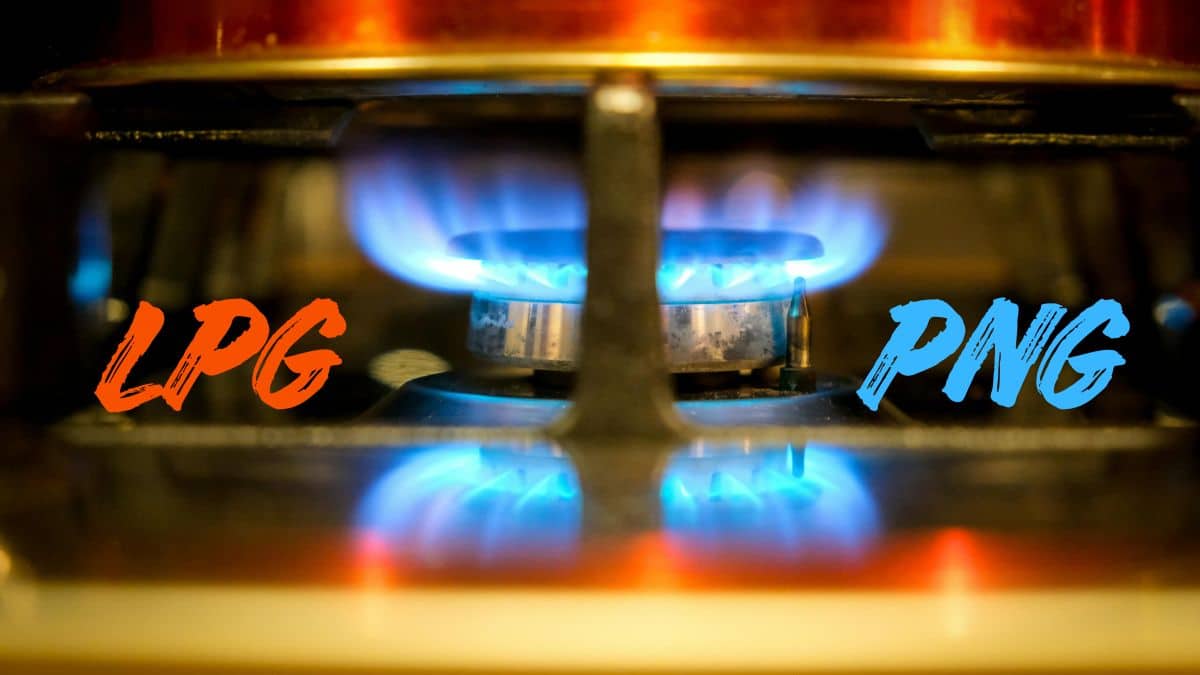
The comparison of LPG vs PNG is becoming more common in India as gas prices continue to change and supply issues arise from time to time. LPG shortage has been a recurring problem for many years, affecting households in different parts of the country and sometimes causing delays in cylinder delivery.
At the same time, more cities are getting PNG connections, giving people a more reliable option for daily cooking. Both LPG and PNG are widely used in kitchens, but they differ in supply, cost, and safety. With the expansion of piped gas networks, many households are now comparing LPG vs PNG to decide which option is safer, more convenient, and cost-effective for their home.
Understanding LPG and PNG
LPG (Liquefied Petroleum Gas) is a mixture of propane and butane stored in cylinders and delivered to homes. It is widely used across India, especially in areas without pipeline connectivity.
PNG (Piped Natural Gas) is supplied directly through pipelines to households. It is mainly available in cities with developed gas infrastructure and is known for its convenience and efficiency.
What are the key differences between LPG vs PNG
| Feature | LPG (Liquefied Petroleum Gas) | PNG (Piped Natural Gas) |
| Type of Supply | Cylinder-based | Pipeline connection |
| Safety | Higher risk if leaked (heavier than air) | Safer (lighter than air, disperses quickly) |
| Cost | Price fluctuates, can be expensive | Usually cheaper in long run |
| Billing | Pay per cylinder | Monthly usage-based billing |
| Convenience | Requires booking & replacement | Continuous supply, no booking needed |
| Availability | Available across India | Limited to cities |
| Installation | Minimal setup | Initial installation cost |
| Environmental Impact | Moderate emissions | Cleaner and eco-friendly |
Safety Comparison for LPG vs PNG
Safety is one of the biggest factors when choosing a cooking gas.
PNG is generally considered safer because it is lighter than air and quickly disperses in case of leakage. Many PNG systems also include automatic shut-off features, reducing the chances of accidents.
LPG, on the other hand, is heavier than air and can settle near the ground if leaked. This increases the risk of fire hazards, especially in closed spaces. While LPG cylinders are designed with safety features, careful handling is essential.
Cost Factor
LPG prices in India are revised periodically and may vary depending on subsidies and market rates. For households without subsidies, LPG can become costly over time.
PNG is billed based on actual usage, similar to electricity. In many cities, it turns out to be more economical for regular users. However, the initial installation cost may be a factor for some households.
Convenience and Availability
PNG offers a major advantage in terms of convenience. It provides a continuous supply, eliminating the need to book cylinders or worry about running out of gas.
LPG, while slightly less convenient, is widely available even in rural and remote areas making it a dependable option where PNG is not accessible.
Environmental Impact
PNG is a cleaner fuel compared to LPG. It produces fewer carbon emissions and burns more efficiently, making it a better choice for environmentally conscious households.
LPG Cylinder Shortage in India – Live Updates on Supply, Price, and Latest News
Why Cities in India Are Switching to PNG Gas
Urban areas across India are gradually shifting towards PNG, and several key factors are driving this transition:
- Improved Safety Standards
City administrations and housing societies are prioritizing safer energy solutions. PNG reduces the risk of gas accumulation and large-scale accidents, making it a preferred choice in densely populated areas. - Rising LPG Prices
Frequent price fluctuations in LPG cylinders have pushed many households to look for more stable and cost-effective alternatives. PNG’s usage-based billing offers better control over monthly expenses. - Government Push for Cleaner Fuel
The government is actively promoting cleaner energy sources to reduce pollution levels in cities. PNG, being a low-emission fuel, aligns with environmental goals and urban sustainability plans. - Expanding Pipeline Infrastructure
With the expansion of city gas distribution networks, more households now have access to PNG connections. This increased availability is making the switch easier than ever. - Convenience for Modern Lifestyle
Busy urban households prefer hassle-free solutions. PNG eliminates the need for cylinder booking, storage, and replacement, offering uninterrupted supply. - Space-Saving and Practical
In apartments and small homes, storing bulky LPG cylinders can be inconvenient. PNG systems require minimal space, making them ideal for modern urban living.
Final Verdict
Both LPG and PNG have their advantages and limitations. PNG stands out for safety, convenience, and long-term cost-effectiveness, especially in urban areas. LPG, however, remains a reliable and accessible option, particularly in regions where pipeline connectivity is not yet available.
For consumers, the choice ultimately depends on location, budget, and availability. As India continues to expand its gas pipeline network, PNG is likely to become an increasingly popular choice for modern households.
Want more such updates and easy-to-understand comparisons? Stay connected with Flash Trend News for the latest insights on energy, prices, and everyday essentials.

Pooja Gautam is a news journalist and digital content writer at Flash Trend News, with experience in covering real-time updates and trending stories. She reports on Indian politics, world affairs, cricket and IPL, technology, health, and lifestyle topics.
She is known for delivering clear, accurate, and reader-friendly news content that helps audiences stay informed in a fast-moving digital world. Her focus is on simplifying complex news and presenting it in an easy-to-understand format for everyday readers.
Through Flash Trend News, Pooja aims to provide fast, reliable, and trustworthy news coverage for Indian audiences.