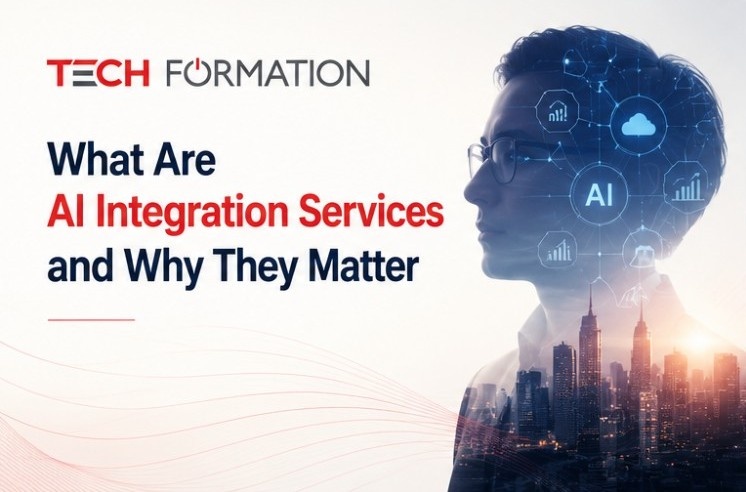
AI on its own does not solve business problems. It needs to fit into real systems, workflows, and decisions. That’s exactly where ai integration services come in. They connect AI models with existing tools like CRMs, ERPs, and analytics platforms so teams can actually use insights in real time.
Companies focus on this connection layer. Instead of building isolated AI tools, they ensure everything works together. When integration is done right, AI becomes part of everyday operations—not a separate experiment that collects dust.
Why AI Projects Fail Without Proper Integration
Many AI initiatives fail not because the models are weak, but because they are never properly integrated. A model might accurately predict customer demand, but if it cannot connect to inventory or sales systems, it creates no business value.
Poor ai data integration often sits at the center of this issue. Data stays scattered, outdated, or inconsistent across systems. As a result, teams lose trust in AI outputs. Without reliable integration, even the best AI becomes another unused dashboard.
What AI Integration Services Include (With Examples)
AI integration involves more than plugging in a model. It requires structured engineering work to ensure systems communicate effectively and consistently.
Core components typically include:
- Connecting AI models to business software through APIs
- Building data pipelines that handle real-time and batch processing
- Synchronizing structured and unstructured data across systems
- Implementing monitoring to track model performance
For example, a recommendation engine only delivers value when it integrates with an e-commerce platform. Without that connection, it cannot influence what customers actually see.
Retail AI Vision Systems Integration: Real-World Use Case
Retail offers one of the clearest examples of AI integration in action. Retail AI vision systems integrate computer vision to monitor shelves, track customer movement, and detect stock issues. A camera alone does nothing useful. The value appears when the system connects to inventory databases and alert systems. If a shelf runs out, staff receive an instant notification. That reduces lost sales and improves customer experience without manual checks.
Retailers that implement integrated vision systems often see better stock accuracy and smoother store operations. The impact comes from integration—not just the AI model.
AI Data Integration: Foundation of Scalable AI Systems
Data fuels every AI system, but raw data is rarely ready for use. AI data integration ensures that data from different sources becomes clean, consistent, and accessible. This process includes transforming formats, removing duplicates, and syncing updates across systems. Without it, AI models rely on incomplete or outdated inputs, which leads to unreliable predictions.
Scalable AI systems depend on strong data pipelines. When data flows smoothly, businesses can expand AI use cases without rebuilding infrastructure each time.
Benefits of AI Integration for Business Operations
AI integration improves both efficiency and decision-making. It allows businesses to automate routine processes while keeping humans focused on strategic work.
Key benefits include:
- Faster decision-making through real-time insights
- Reduced manual work in reporting and monitoring
- Better accuracy in forecasting and operations
- Improved collaboration across departments
These benefits appear only when AI connects deeply with existing systems. Integration ensures that insights reach the right people at the right time.
Common Challenges in AI System Integration
AI integration comes with practical challenges that businesses must address early. Legacy systems often lack compatibility with modern APIs, which makes integration slower and more complex. Data inconsistency is another major issue. Different systems may store the same information in different formats, creating confusion. Teams also resist change when they do not understand how AI supports their work.
Successful integration requires both technical planning and clear communication. Without alignment across teams, even well-built systems struggle to gain adoption.
How to Choose the Right AI Integration Partner
Choosing the right partner can determine whether an AI project succeeds or fails. A strong provider focuses on implementation, not just theory.
Look for partners who:
- Understand your industry and workflows
- Design scalable and maintainable architectures
- Provide ongoing support after deployment
Companies like Tech Formation approach integration as a continuous process. AI systems evolve, and integrations must adapt alongside business needs.
Conclusion: Future Trends in AI Integration Services
AI adoption continues to grow, but integration remains the key factor behind real success. Businesses no longer ask if they should use AI—they focus on making it work effectively. Future trends point to tighter integration among AI, cloud infrastructure, and real-time data systems. Industries like retail and logistics will continue to benefit from integrated solutions, especially in automation and decision-making.
AI integration services will play a central role in this shift. By combining retail ai vision systems integration and strong ai data integration, businesses can move from experimentation to consistent results.
FAQs
What do ai integration services cost?
Costs vary by complexity, systems, and data readiness. Small setups cost less; enterprise integrations require a higher investment.
How long does AI integration take?
Simple projects take weeks. Complex systems with heavy ai data integration can take months.
How do I choose the right AI integration partner?
Pick a provider with industry experience, scalable architecture, and strong post-deployment support like Tech Formation.
Can AI integration scale with business growth?
Yes. Well-designed systems allow easy expansion without rebuilding infrastructure.

I am here to contribute Blogs regarding latest trend.