







Most businesses focus heavily on building software. But very few pay enough attention to what happens after the software goes live.
That is where the real challenge begins.
An enterprise application may work perfectly during launch, but over time things start changing. User traffic increases, security risks evolve, new technologies appear, and business operations become more complex. If the application is not maintained properly, even a powerful system can slowly become unreliable.
Employees start facing slow performance. Customers experience delays. Systems crash unexpectedly. Small technical issues turn into expensive operational problems.
This is why modern businesses are shifting their focus from only software development to smart maintenance strategies.
Today, enterprise applications are the backbone of business operations. Companies depend on them for:
- customer management,
- internal communication,
- inventory control,
- financial operations,
- workflow automation,
- and data management.
When these systems fail, businesses lose time, money, and customer trust.
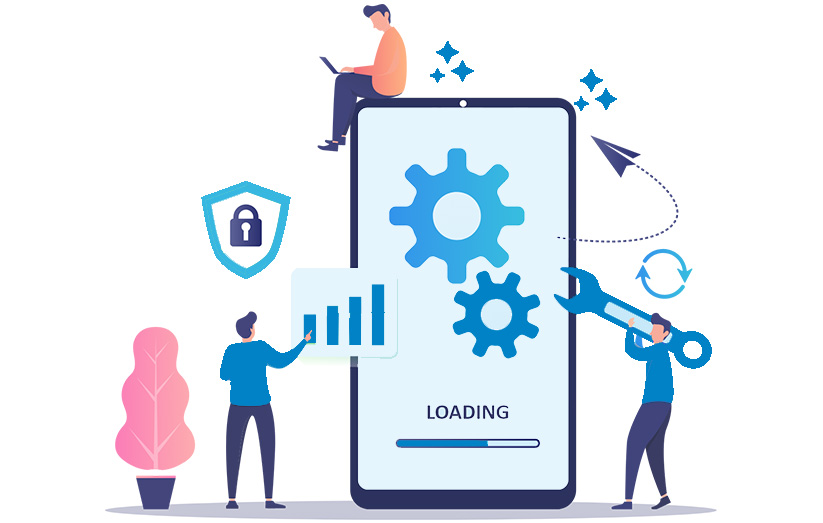
Smart maintenance is not only about fixing bugs anymore. It is about keeping enterprise applications secure, stable, scalable, and future-ready.
In this blog, we will explore how smart maintenance strategies improve enterprise application reliability and why businesses are treating long-term software care as a major part of digital growth.
Reliability Is More Important Than Businesses Think
Many businesses only notice software maintenance when something breaks.
But reliability directly affects daily business operations.
A reliable application:
- performs consistently,
- loads quickly,
- handles users smoothly,
- stays secure,
- and minimizes downtime.
An unreliable application creates:
- operational delays,
- frustrated employees,
- customer complaints,
- and lost productivity.
For growing businesses, application reliability becomes even more important because operations depend heavily on digital systems every single day.
Modern Applications Face Constant Pressure
Enterprise software operates in constantly changing environments.
Applications must adapt to:
- increasing user traffic,
- changing devices,
- cloud environments,
- cybersecurity threats,
- and evolving business requirements.
A system that worked well two years ago may struggle today if it has not been updated properly.
Smart maintenance strategies help applications evolve continuously instead of becoming outdated systems.
Proactive Maintenance Prevents Bigger Problems
One of the biggest mistakes businesses make is waiting for problems to happen before taking action.
Reactive maintenance usually means:
- emergency fixes,
- unexpected downtime,
- rushed troubleshooting,
- and operational disruptions.
Smart businesses now focus on proactive maintenance.
This means:
- monitoring applications continuously,
- identifying risks early,
- optimizing performance regularly,
- and preventing issues before users even notice them.
Preventive care is always less expensive than emergency recovery
Performance Optimization Improves User Experience
Employees and customers expect software to work smoothly at all times.
Even small delays can create frustration.
For example:
- slow dashboards,
- delayed transactions,
- frozen screens,
- or long loading times
can affect productivity and customer satisfaction significantly.
Smart maintenance strategies improve:
- application speed,
- server performance,
- database efficiency,
- and overall system responsiveness.
A faster application creates a smoother experience for everyone using the platform.
Security Maintenance Protects Business Data
Cybersecurity is one of the biggest reasons businesses prioritize software maintenance today.
Outdated applications often contain vulnerabilities that hackers can exploit easily.
Enterprise systems usually store sensitive information such as:
- customer records,
- employee data,
- financial information,
- and operational reports.
Security-focused maintenance helps businesses:
- install security patches,
- update authentication systems,
- improve encryption,
- and monitor suspicious activity.
Without regular updates, even strong systems can become major security risks over time.
Downtime Can Damage Business Reputation
Many companies underestimate the real cost of downtime.
When enterprise applications stop working:
- employees cannot complete tasks,
- customers lose trust,
- orders may get delayed,
- and business operations slow down.
In competitive industries, even short periods of downtime can affect reputation.
Smart maintenance strategies reduce downtime through:
- continuous monitoring,
- automated alerts,
- backup systems,
- and regular infrastructure checks.
Businesses that prevent downtime build stronger operational stability.
Scalability Requires Continuous Maintenance
A growing business needs software that can grow with it.
As operations expand, applications must handle:
- more users,
- larger databases,
- additional integrations,
- and higher transaction volumes.
Without optimization, systems may become unstable under pressure.
Maintenance helps businesses:
- upgrade infrastructure,
- improve performance,
- and prepare applications for future growth.
Reliable applications are not built once. They are continuously improved over time.
Smart Monitoring Improves System Visibility
Modern maintenance strategies rely heavily on real-time monitoring.
Businesses can track:
- application health,
- server performance,
- system errors,
- traffic spikes,
- and operational bottlenecks.
This visibility helps technical teams identify issues quickly before they impact operations.
Real-time monitoring also improves decision-making and long-term planning.
Cloud Applications Also Need Maintenance
Many businesses believe cloud-based systems manage themselves automatically.
That is not completely true.
Cloud applications still require:
- optimization,
- security management,
- infrastructure monitoring,
- and performance tuning.
Without maintenance, cloud systems can still experience:
- slow performance,
- integration failures,
- security vulnerabilities,
- and operational inefficiencies.
Cloud technology improves flexibility, but maintenance remains essential.
Employee Productivity Depends on Stable Applications
Poor software reliability affects employees every day.
When systems:
- crash frequently,
- respond slowly,
- or create technical issues,
employees waste valuable time dealing with disruptions.
Reliable applications help teams:
- complete tasks faster,
- communicate better,
- and work more efficiently.
Businesses with stable systems usually experience better operational productivity and smoother workflows.
Continuous Updates Support Innovation
Businesses evolve constantly.
Companies may eventually need:
- automation features,
- AI integrations,
- mobile optimization,
- advanced reporting,
- or new workflows.
Maintenance strategies allow businesses to improve systems gradually instead of rebuilding applications from scratch later.
Continuous updates help applications stay competitive and relevant.
Smart Maintenance Supports Customer Retention
Customers expect digital experiences to feel smooth and reliable.
If an application:
- fails repeatedly,
- performs poorly,
- or feels outdated,
customers often move to competitors.
Reliable applications create:
- better user trust,
- improved customer satisfaction,
- and stronger brand reputation.
Businesses investing in long-term maintenance often provide better digital experiences overall.
Technology Partnerships Matter
Many businesses do not have internal teams large enough to manage complex enterprise maintenance continuously.
This is why companies increasingly partner with experienced technology providers who can:
- monitor systems,
- improve security,
- optimize performance,
- and provide ongoing technical support.
Strong technical partnerships help businesses focus on growth while maintaining operational stability.
The Future of Enterprise Reliability
Enterprise applications are becoming more intelligent and connected every year.
Future maintenance strategies will increasingly involve:
- AI-driven monitoring,
- predictive maintenance,
- automated optimization,
- and cloud-native infrastructure management.
Businesses that invest in smart maintenance today will be better prepared for future operational demands and digital transformation challenges.
Important Industry Trends
Here are some key trends shaping enterprise application maintenance today:
| Trend | Business Impact |
|---|---|
| Businesses prioritizing proactive monitoring | Rapid growth |
| Increase in cybersecurity-focused maintenance | Higher than ever |
| Organizations moving toward cloud infrastructure | Continuously growing |
| Demand for real-time system monitoring | Significant increase |
| Companies investing in automation and AI optimization | Expanding rapidly |
These trends show why long-term software reliability is becoming a major business priority.
Conclusion
Enterprise applications are no longer simple business tools. They have become the foundation of daily operations, customer interactions, communication, and long-term business growth.
But software reliability does not happen automatically.
Applications require continuous monitoring, optimisation, security improvements, scalability planning, and proactive technical care to remain stable and efficient over time.
Smart maintenance strategies help businesses reduce downtime, improve performance, strengthen security, support scalability, and deliver better user experiences across operations.
Companies that invest in long-term software reliability are often more prepared for growth, digital transformation, and changing market demands.
As modern businesses continue depending heavily on digital systems, professional application support and maintenance services are becoming essential for keeping enterprise applications secure, reliable, scalable, and future-ready.